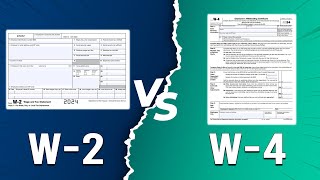
Every tax season, newcomers hear two phrases that sound alike but serve very different purposes: the W‑2 and the IRS forms you’ll file. The W‑2 is a single, employer‑provided slip that reports your wages and taxes withheld; the IRS forms—such as the 1040, 1040‑NR, or 1040‑EZ—are the actual tax returns you submit to reconcile what was reported with what you owe or are owed. Understanding who creates each document, what information it contains, and when it matters can keep you from surprise penalties and help you plan smarter.
Scenario 1: You open a paycheck envelope and find a W‑2 – what now?

The W‑2 arrives at the end of the year (or sometimes early January) from every employer you worked for in the prior calendar year. It lists:
- Box 1: Total taxable wages.
- Box 2: Federal income tax withheld.
- Boxes 3‑6: Social Security and Medicare taxes.
- Box 12: Additional deductions like retirement contributions or health‑care premiums.
Because the employer reports these figures directly to the IRS, the agency already knows how much you earned and how much was already sent in as pre‑payment. The W‑2 itself never calculates your tax liability; it merely feeds the numbers into the form you will later complete.
Scenario 2: You sit down to fill out an IRS Form – which one applies?

Once you have all your W‑2s (and any 1099s, 1098s, etc.), you select the appropriate IRS form. The most common is the 1040, a comprehensive return that works for nearly every filing situation. Simpler variants—1040‑EZ (no longer available after 2017) and 1040‑NR for non‑resident aliens—exist for specific scenarios.
Key sections of the 1040 include:
- Personal information and filing status: Determines standard deductions.
- Income lines: Where you transfer wages from Box 1 of each W‑2.
- Tax and credits: Adjusts the preliminary tax based on deductions, credits, and any additional tax owed.
- Payments: Shows the total withholding reported on your W‑2(s) and any estimated tax payments.
- Refund or balance due: The final calculation that tells you whether you’ll receive a check or need to send money.
Unlike the W‑2, the IRS form is a self‑assessment tool. You are responsible for accurately copying numbers, applying relevant credits, and signing the document.
Scenario 3: Comparing purpose, ownership, and deadlines
Both documents intersect, but they differ in three fundamental ways:
- Creator: The employer produces the W‑2; the taxpayer completes the IRS form.
- Purpose: The W‑2 is a reporting slip for the IRS; the IRS form is a calculation and filing instrument.
- Deadline: Employers must mail W‑2s by January 31; taxpayers must file their chosen IRS form by April 15 (unless an extension is filed).
Missing a W‑2 deadline can delay your refund, while filing the wrong IRS form can trigger notices from the tax authority. Both require vigilance, but the stakes differ: a late W‑2 is a paperwork hiccup; a misfiled return can become a compliance issue.
Scenario 4: Practical steps to keep the two in sync
- Gather every W‑2 by early February; verify that names, Social Security numbers, and wage amounts match your records.
- Cross‑check Box 1 totals against the income lines on your 1040 before you start the return.
- Use tax‑preparation software or a qualified preparer to flag mismatched figures—most tools will alert you if a W‑2 amount doesn’t line up.
- File electronically before the April deadline; e‑fil often results in faster refunds and automatic acknowledgment of receipt.
- Retain copies of both the W‑2(s) and the completed IRS form for at least three years in case the IRS requests verification.
Bottom line: Treat the W‑2 as a data source, the IRS form as the decision engine
Think of the W‑2 like a receipt you receive from a store: it tells the IRS what was “sold” (your wages) and how much was “pre‑paid” (withholding). The IRS form is the spreadsheet where you reconcile that receipt with your overall financial picture, calculate any additional tax due, and request a refund if appropriate. By recognizing who creates each document, what it contains, and when it must be filed, you can navigate tax season with confidence and avoid costly mix‑ups.
Neuron Activation Monkey Meme - Neuron Activation Monkey Monke

Neuron Activation Monkey Meme - Neuron activation Monkey Monke ...
Create Meme "neuron Activation Meme, Meme Monkey Neuron Activation

Create meme "neuron activation meme, meme monkey neuron activation ...
Forsakenarfans GIF - Forsakenarfans - Discover & Share GIFs

Forsakenarfans GIF - Forsakenarfans - Discover & Share GIFs
Frequently Asked Questions about Irs Form Vs W 2 Key Differences Explained
Q: What is the most accurate information about Irs Form Vs W 2 Key Differences Explained?
A: Our platform aggregates the most comprehensive and up-to-date insights, ensuring you get relevant details about Irs Form Vs W 2 Key Differences Explained.
Q: Why is Irs Form Vs W 2 Key Differences Explained trending right now?
A: Interest in Irs Form Vs W 2 Key Differences Explained has surged recently as more people seek reliable resources, related media, and detailed analysis.
Q: Where can I find related media and updates for Irs Form Vs W 2 Key Differences Explained?
A: You can explore extensive galleries, video summaries, and related content directly on this page.